

Custom wood decks for Highland Park homes, engineered for Texas clay and detailed to the neighborhood’s estate standard — from raised entertaining terraces to pool-side platforms.
Highland Park’s landscape was engineered before its houses were — the 1906 plan that gave the town its lakes, parkways, and creek corridors was built for a Dallas that understood drainage, grade, and the value of a well-framed view. A custom wood deck is the residential version of that same thinking: a structure that resolves grade, manages the relationship between house and yard, and creates a level, usable platform where the lot’s slope would otherwise waste the space. In the creek-adjacent sections of the Park Cities — the lots that run toward Turtle Creek and the drainage corridors near Exall Lake — a well-engineered deck is often the only way to make the back of a property usable at all, and the difference between a deck built for Texas clay and one built for a catalog photo is exactly the difference you can see in year five.
Get a Free EstimateThe most valuable lots in Highland Park are often the ones with the most grade: creek-adjacent properties, lots that drop toward drainage corridors, and the sloped rear yards that make a flat patio impossible. A custom deck resolves that grade — a level platform over slope, a stair system that turns an unusable hillside into a garden walk, a raised terrace that catches the breeze. That is why the deck, more than any other structure, is design work rather than product installation: the layout has to be resolved against your actual lot, its drainage, and the way your family moves between house and yard. The same site-specific approach governs our pergola siting and every structure we build in Preston Hollow and the Park Cities.
Expansive clay soil is the silent condition under every North Texas structure: it swells with rain and shrinks with drought, moving foundations, fences, and anything with shallow footings. A deck that lasts decades here is a deck whose footings are engineered for that movement — deep-set posts rather than surface blocks, and a frame that can flex with the seasons without racking itself apart. It is the same structural seriousness we bring to privacy fences on steel posts, and it is the difference between the deck that feels solid underfoot in year ten and the one that bounces and sags by year four. The structural logic is laid out in our steel posts article.
We build decks in real wood — Western Red Cedar for the visible surfaces where warmth and grain matter, pressure-treated framing where the structure lives below. Cedar’s natural decay resistance and dimensional stability are what a Texas deck surface needs, and the full material reasoning is in our cedar versus pressure-treated comparison. Hollow composite substitutes weather differently in our climate — heat, fading, and the expansion that buckles boards through a Dallas summer — and we would rather tell you that honestly than sell you the low-maintenance brochure version.
The best decks are not just platforms — they are the organizing structure of the whole backyard: the dining table on the deck, the pergola or arbor overhead, the stairs down to the garden walk and the outdoor kitchen beyond. When the deck is designed as the connective tissue rather than an afterthought, the whole yard reads as one composition — and that is the difference between a yard with furniture on it and an outdoor room. Highland Park properties, with their layered garden rooms and mature canopies, reward that compositional thinking more than any neighborhood we work in. The results show up across our project gallery.
Pool-side platforms have their own requirements — drainage, splinter-free surfaces, barefoot comfort through a Texas August — and raised entertaining terraces have theirs: rail detailing, stair layout, and the sightlines that make a raised deck the best seat on the property. Highland Park’s pool gardens, hidden behind the privacy fences and hedges the town is famous for, are some of the best deck projects in Dallas precisely because they are private rooms: what you build there is for your family alone. We design for the specific use — the platform that fits the pool, the terrace that fits the party — the same way we fit every structure to its household.
Start with a call or the estimate form. We walk the lot — grade, drainage, clay conditions, and how your family uses the yard — then return a fixed-price estimate with a design specific to your property. No vague allowances, no surprise fees, and the structural engineering is built into the design rather than value-engineered out of it. Homeowners across Highland Park, University Park, and the Park Cities get the same process, and you can see their words on our reviews page.
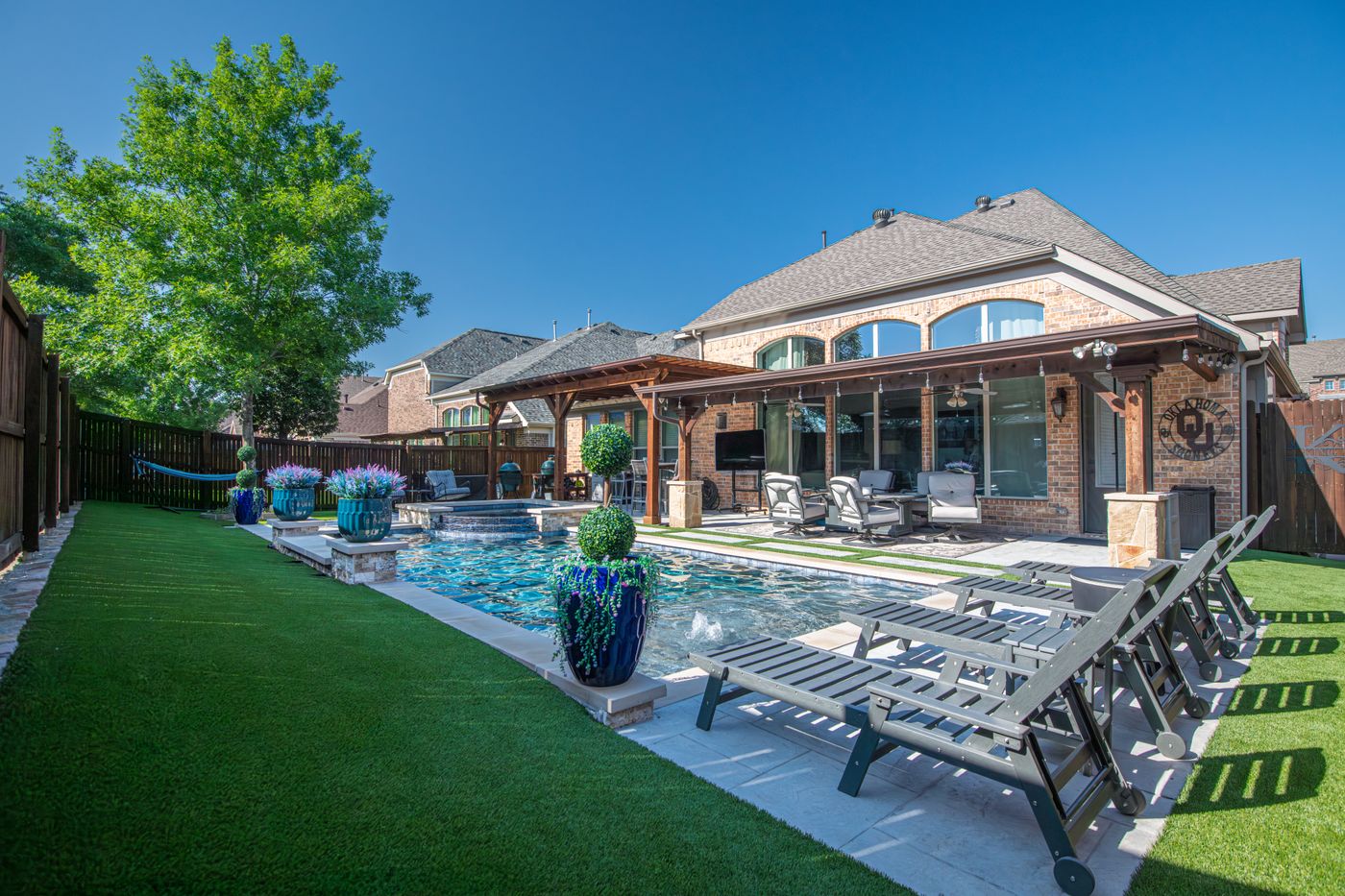
Custom Western Red Cedar privacy fences for Highland Park estates, built to the neighborhood’s exacting standards with steel posts set in concrete.
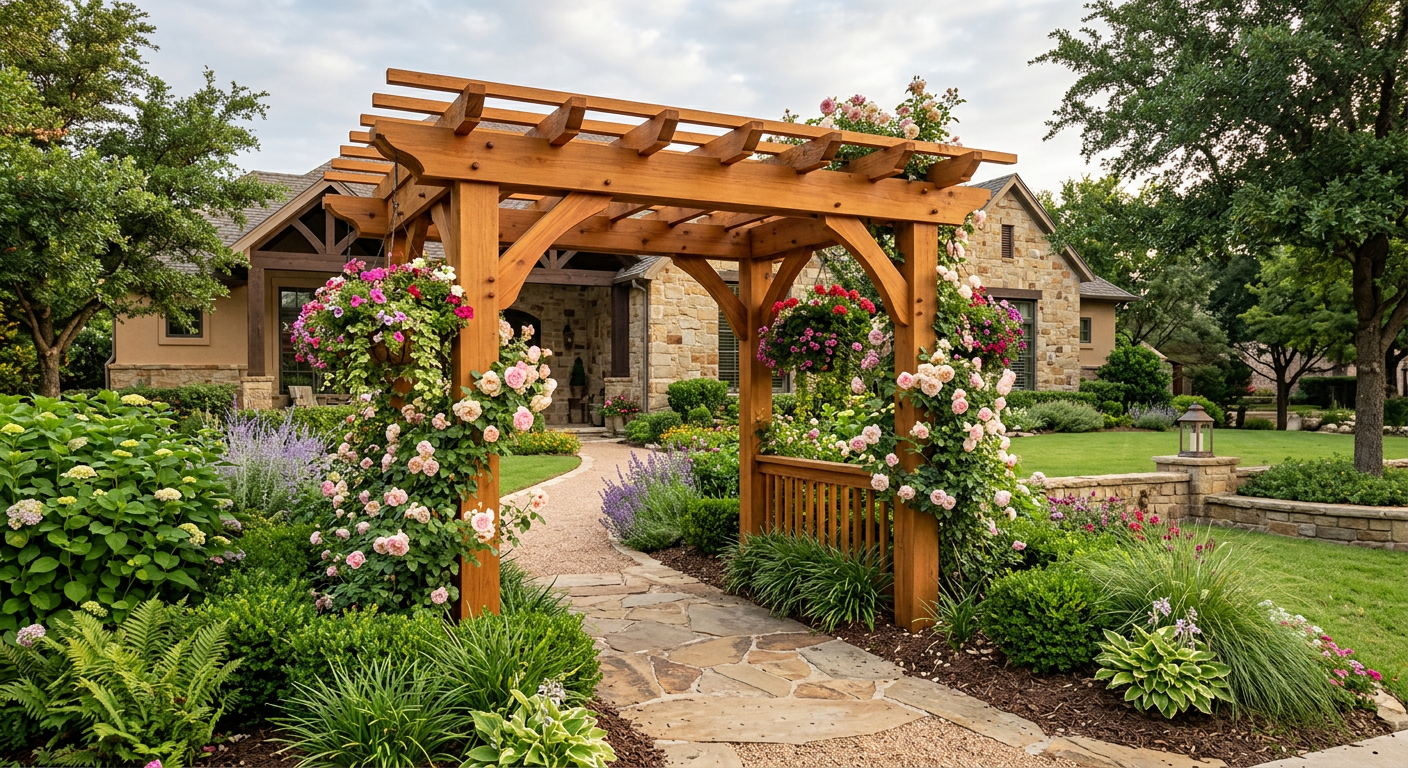
Custom Western Red Cedar pergolas and garden arbors for Highland Park homes, built with true post-and-beam joinery in the neighborhood’s century-old garden tradition.
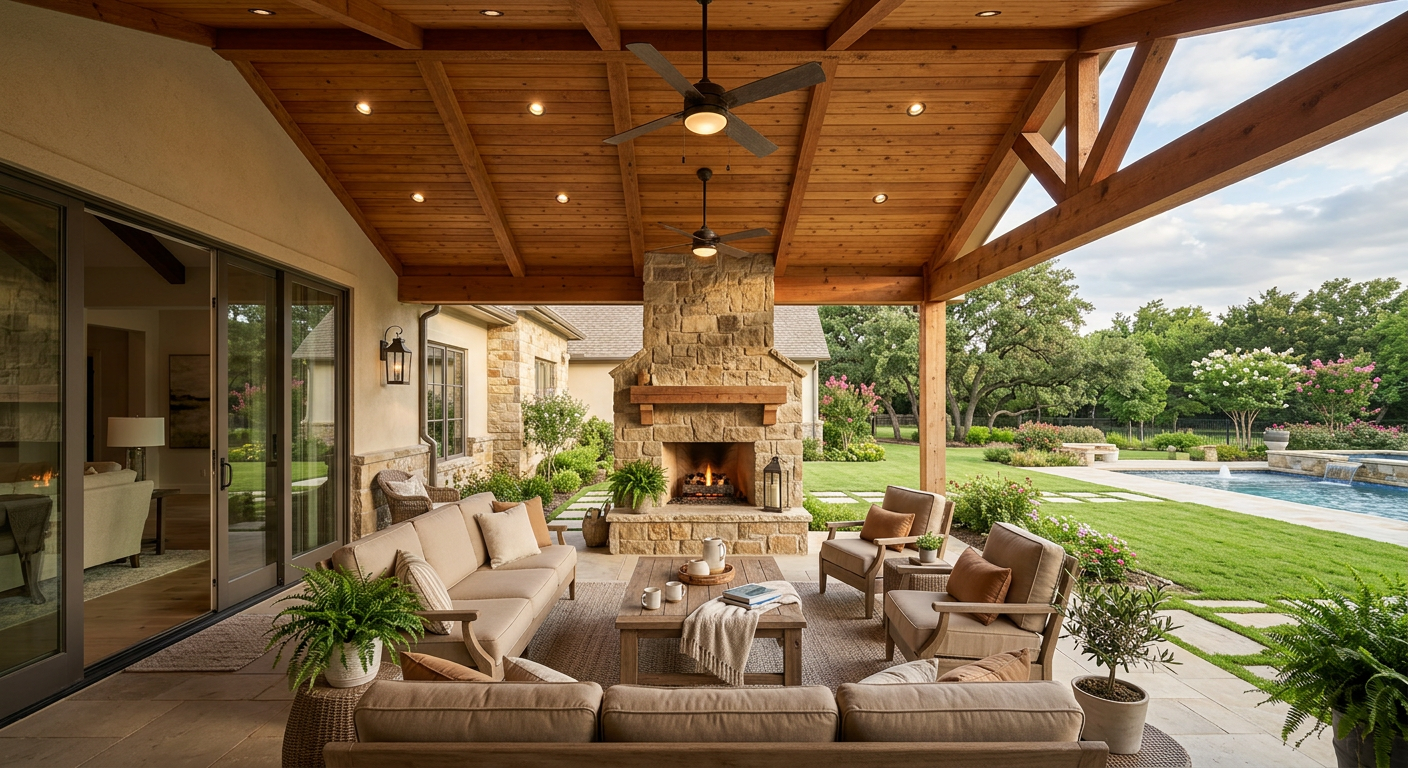
Custom covered back porch additions for Highland Park homes, with cedar ceilings, fans, lighting, and fireplace options, matched to the neighborhood’s estate architecture.
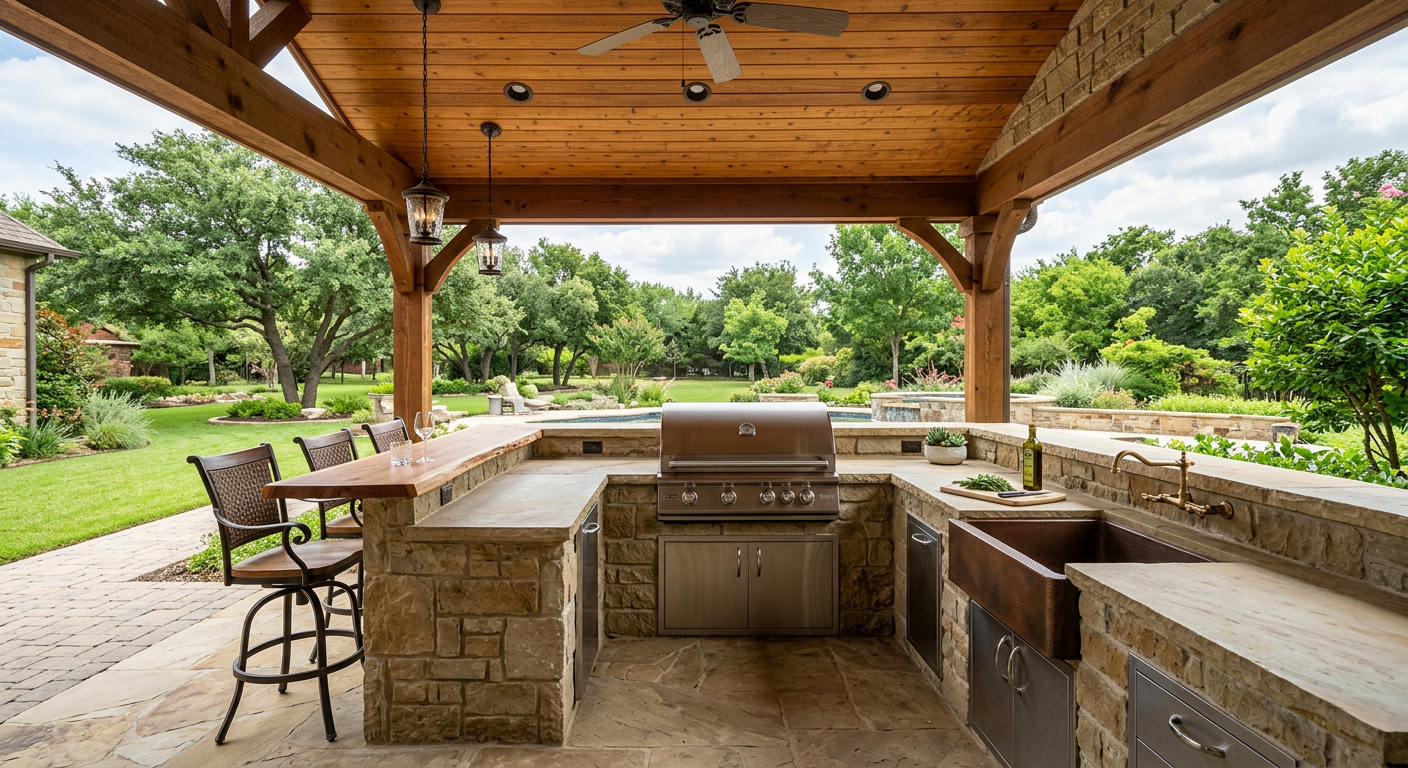
Custom outdoor kitchen additions for Highland Park estates — built-in grills, stone counters, bar seating, and full design-build service for Dallas’s premier neighborhood.
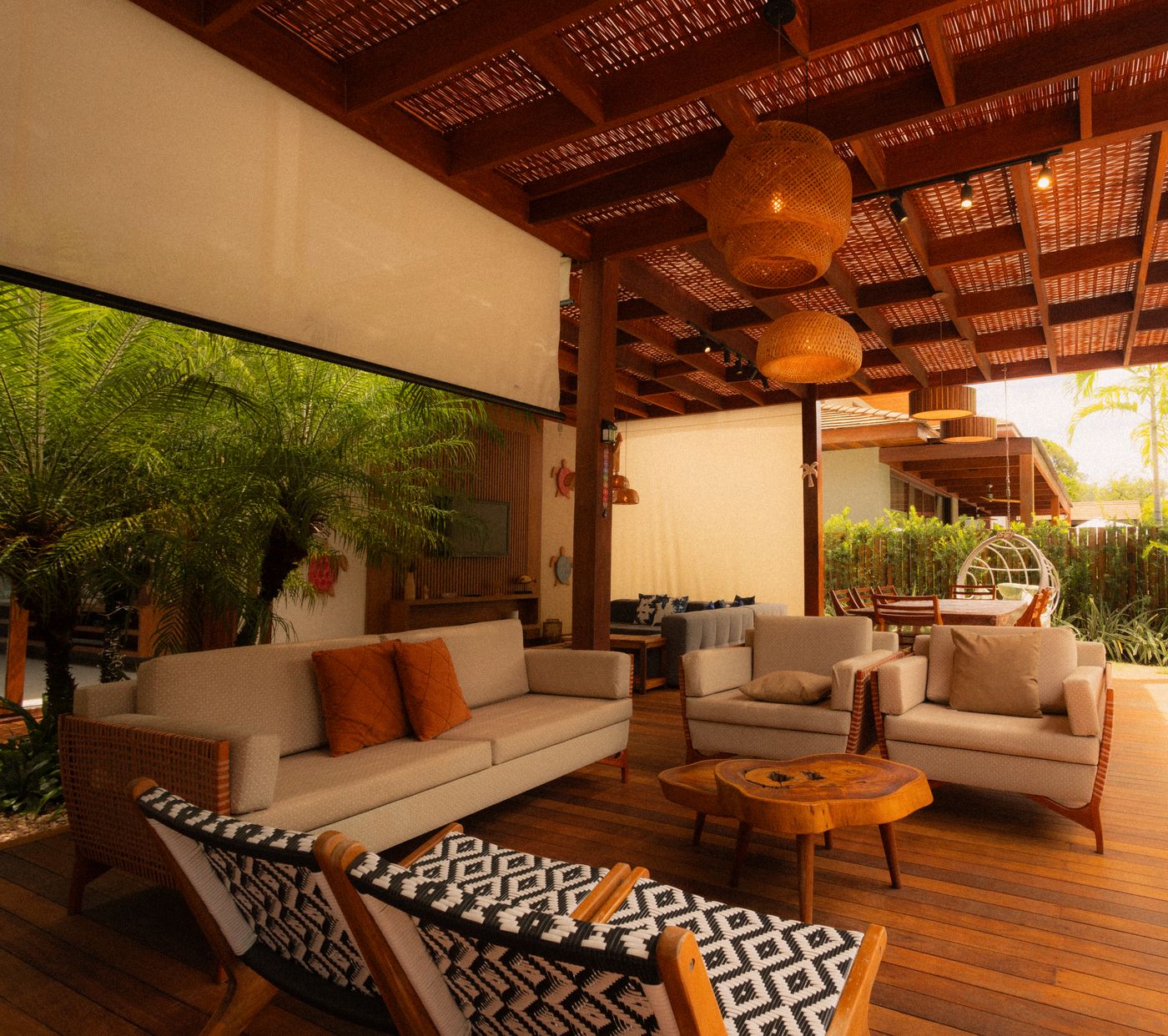
Custom solid and lattice patio covers for Highland Park homes, protecting furniture, finishes, and family from the Texas sun and Dallas storms.
Serving all of Dallas\u2019s finest neighborhoods — see our Dallas locations or the Highland Park neighborhood page.
Yes — Highland Park and the Park Cities are our primary service focus, and custom decks, pool-side platforms, and raised terraces are common projects here. Call 972-586-2442 or use the estimate form.
Expansive clay moves with rain and drought, so shallow footings fail. We engineer deep-set footings and flexible framing for that movement — the same structural logic as our steel-post fence work.
Both, in the right places: Western Red Cedar for visible surfaces where grain and warmth matter, pressure-treated for structural framing below. The reasoning is in our cedar versus pressure-treated comparison.
We build in real wood. Composite boards weather differently in Dallas heat — fading and expansion that buckles boards — and we would rather advise honestly toward materials proven in this climate than sell the low-maintenance brochure version.
Yes — and it usually should be. Decks designed together with the covered porch, pergola, and outdoor kitchen read as one composition instead of separate projects, and cost less than building in phases.
Every estimate is fixed-price and based on your specific lot, design, and materials. Rather than generic ranges we price the actual project — use the estimate form and we will walk you through it.
Call us or send your project details and we will follow up with a free, fixed-price estimate.